
Services
Concierge home care services in Miami-Dade and Monroe
Every plan starts the same way: an RN in your parent's home within 24 hours, free. What happens after depends on your situation. Pick yours below.
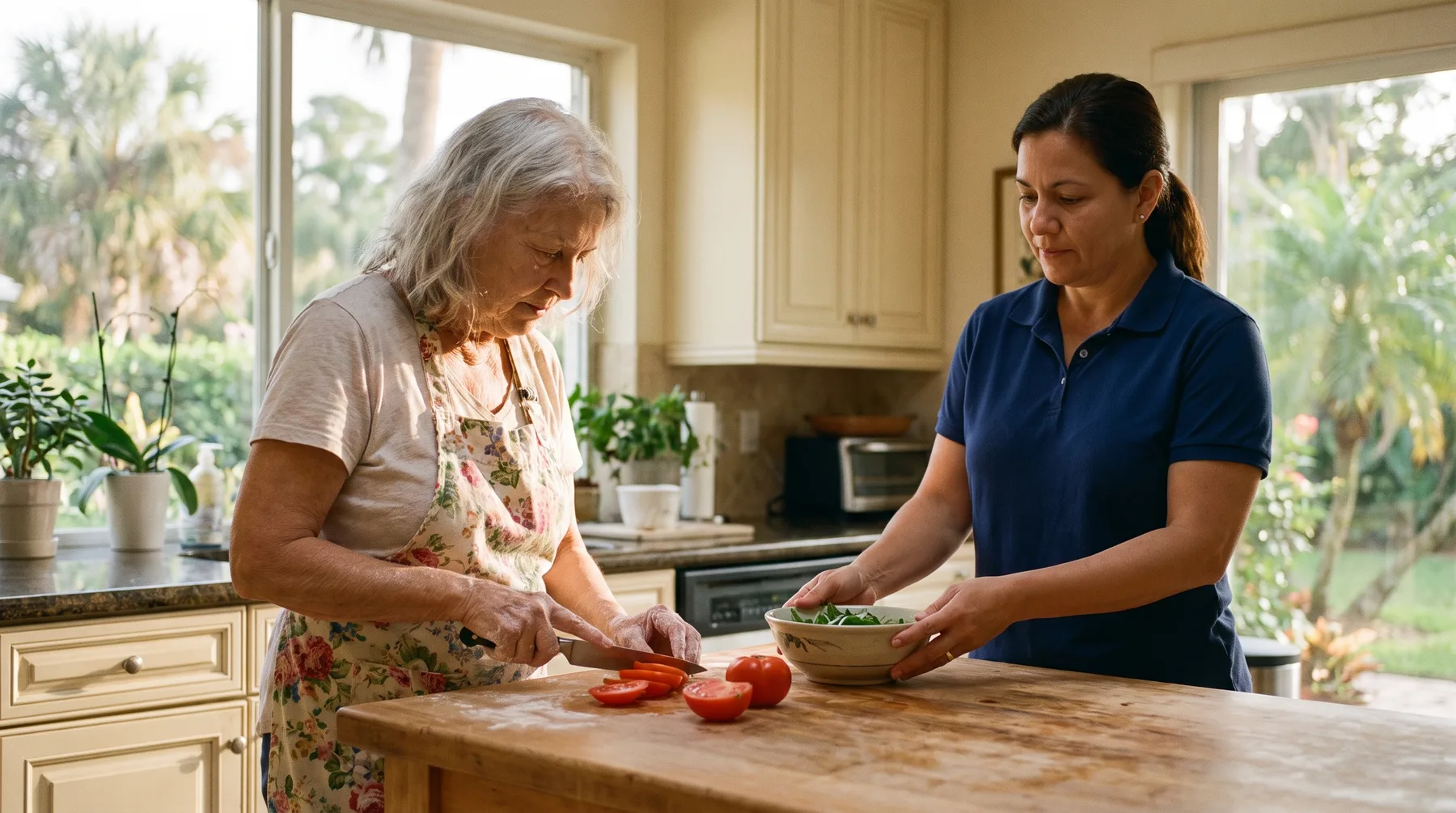
Start with your situation
After a Fall
The first fall is a warning. Most families call us in the week after one. Here's how we make the home safe and keep your parent independent.
After a Hospital Stay
The riskiest week is the first one home. We put a caregiver in the house and an RN over the plan before that week starts.
Memory & Dementia Care
Routine and familiarity do the heavy lifting. We build both: a matched caregiver, the same rhythm, an RN watching over it all.
Hourly Home Care & Companionship
Not a crisis. Just the days getting harder and lonelier. A few good hours of help can change the whole week.
24/7 & Overnight Care
When checking in stops being enough, the choice is a facility or the right coverage at home. This is the second one.
Included with every plan
- Free RN assessment within 24 hours
- A written care plan and a written weekly quote
- Caregiver matching by personality and routine
- RN Care Manager introduces your caregiver in person
- In-home RN supervisory visits every 30 days
- Bilingual caregivers, English and Spanish
- Month-to-month, no long-term contracts
Not sure what you need?
Most families aren't. That's normal.
The free RN home visit answers it in one afternoon, in your parent's own home. You get a written plan and a written quote before you decide anything.
Activities of Daily Living (ADLs)
Personal care
Hands-on help with the body's daily routines. The RN assesses each one at the home visit and writes what your parent needs into the care plan.
Ambulation / Mobility
- Purpose
- Maintains strength, balance and independence
- Reduces the risk of
- Falls, muscle weakness, stiff joints, loss of independence
- Common examples
- Walking with contact guard, walker or cane use, stairs
Transferring
- Purpose
- Allows safe movement between surfaces
- Reduces the risk of
- Falls, fractures, caregiver and client injuries
- Common examples
- Bed to chair, chair to wheelchair, in and out of a car
Bathing / Showering
- Purpose
- Keeps skin clean and healthy while supporting comfort and dignity
- Reduces the risk of
- Skin infections, rashes, body odor, falls in the bathroom
- Common examples
- Tub or shower assistance, sponge/bed baths, scrubbing body, standby supervision
Dressing
- Purpose
- Keeps your parent protected, comfortable and socially confident
- Reduces the risk of
- Exposure to cold or heat, falls from struggling with clothing, isolation from feeling unpresentable
- Common examples
- Putting on pants, buttons and zippers, socks and shoes, weather-appropriate clothing
Grooming / Personal Hygiene
- Purpose
- Maintains appearance, self-esteem, and healthy skin, teeth and gums
- Reduces the risk of
- Dry or cracked skin, tooth decay, gum disease, aspiration pneumonia, low mood and social withdrawal
- Common examples
- Hair care, shaving, applying lotion, nail filing, brushing teeth, denture cleaning, mouth rinses
Toileting
- Purpose
- Ensures safe bathroom use and proper cleansing to keep your parent clean, dry and comfortable with dignity
- Reduces the risk of
- Urinary tract infections, falls on the way to the bathroom, skin breakdown
- Common examples
- Help on and off the toilet, perineal hygiene, changing adult briefs, bedside commode or bedpan
Eating / Feeding
- Purpose
- Encourages adequate nutrition and hydration
- Reduces the risk of
- Malnutrition, dehydration, weight loss, choking
- Common examples
- Cutting food, opening containers, hand-feeding, encouraging fluids
Positioning / Bed Mobility
- Purpose
- Relieves pressure and supports circulation and comfort
- Reduces the risk of
- Pressure sores, stiffness, poor circulation
- Common examples
- Turning and repositioning, sitting up in bed, pillow placement
Instrumental Activities of Daily Living (IADLs)
Help around the home
The tasks that keep a household running, so your parent can keep living in theirs.
Meal Preparation
- Purpose
- Provides regular, balanced meals that follow your parent's diet
- Reduces the risk of
- Malnutrition, skipped meals, food-related complications of dietary restrictions
- Common examples
- Cooking, following dietary guidelines, meal planning, kitchen cleanup
Medication Reminders
- Purpose
- Helps your parent take self-administered medications on schedule
- Reduces the risk of
- Missed or doubled doses, worsening of health conditions, hospital readmissions
- Common examples
- Verbal reminders, opening pill organizers, reporting missed doses to family
Light Housekeeping
- Purpose
- Keeps the home clean, sanitary and safe
- Reduces the risk of
- Trip-and-fall hazards, germs and illness, pests
- Common examples
- Dusting, vacuuming, dishes, trash removal, clearing walkways, changing bedding
Laundry
- Purpose
- Ensures clean clothing and linens are always available
- Reduces the risk of
- Skin irritation, infections, odor, wearing soiled clothing
- Common examples
- Washing, drying, folding
Transportation / Errands
- Purpose
- Keeps your parent connected to healthcare, supplies and community
- Reduces the risk of
- Missed appointments, running out of food or medications, loneliness and isolation
- Common examples
- Escort to doctor visits, grocery shopping, pharmacy pickup, social outings
Companionship
- Purpose
- Provides social interaction, emotional support and mental stimulation
- Reduces the risk of
- Loneliness, depression, anxiety, cognitive decline, unnoticed changes in condition
- Common examples
- Conversation, reading aloud, games and puzzles, hobbies, walks, reminiscing
Questions families ask
What services do you offer?
Hourly home care, 24-hour and overnight care, memory and dementia care, care after a hospital stay or a fall, and respite for family caregivers. Every plan is written and supervised by an RN Care Manager.
Is this medical or non-medical care?
Non-medical. An RN writes and supervises every care plan, but we don't provide skilled nursing or therapy, and we don't bill Medicare or Medicaid.
Do you offer 24-hour care?
Yes. Overnight and 24-hour shift-based care, plus a live person on our phone line 24/7.
What does a home caregiver actually help with?
Personal care: bathing, dressing, grooming, toileting, eating, transfers, walking and repositioning. Around the home: meals, medication reminders, light housekeeping, laundry, errands and rides. And real company. The RN picks from this list based on what your parent needs.
Can you help with dementia or Alzheimer's at home?
Yes. Our caregivers are trained in memory care, and an RN builds a plan around your parent's routine and safety. We match a caregiver to your parent and confirm a backup, so the routine holds even when someone is unwell.
Do you help after a hospital stay or a fall?
Yes. Transitional care after a discharge or a fall is one of the most common reasons families call. An RN assesses the home for risks within 24 hours and a caregiver supports the recovery, which helps avoid a return trip to the hospital.
Can I change the level of care as my parent's needs change?
Yes. Care is month-to-month, and your RN Care Manager adjusts the plan as things change. Start with a few hours, add more, or move to full 24-hour coverage, all with the same team.
Start with an RN home visit
An RN visits within 24 hours and hands you a written care plan and quote. Complimentary, no charge, no obligation.