
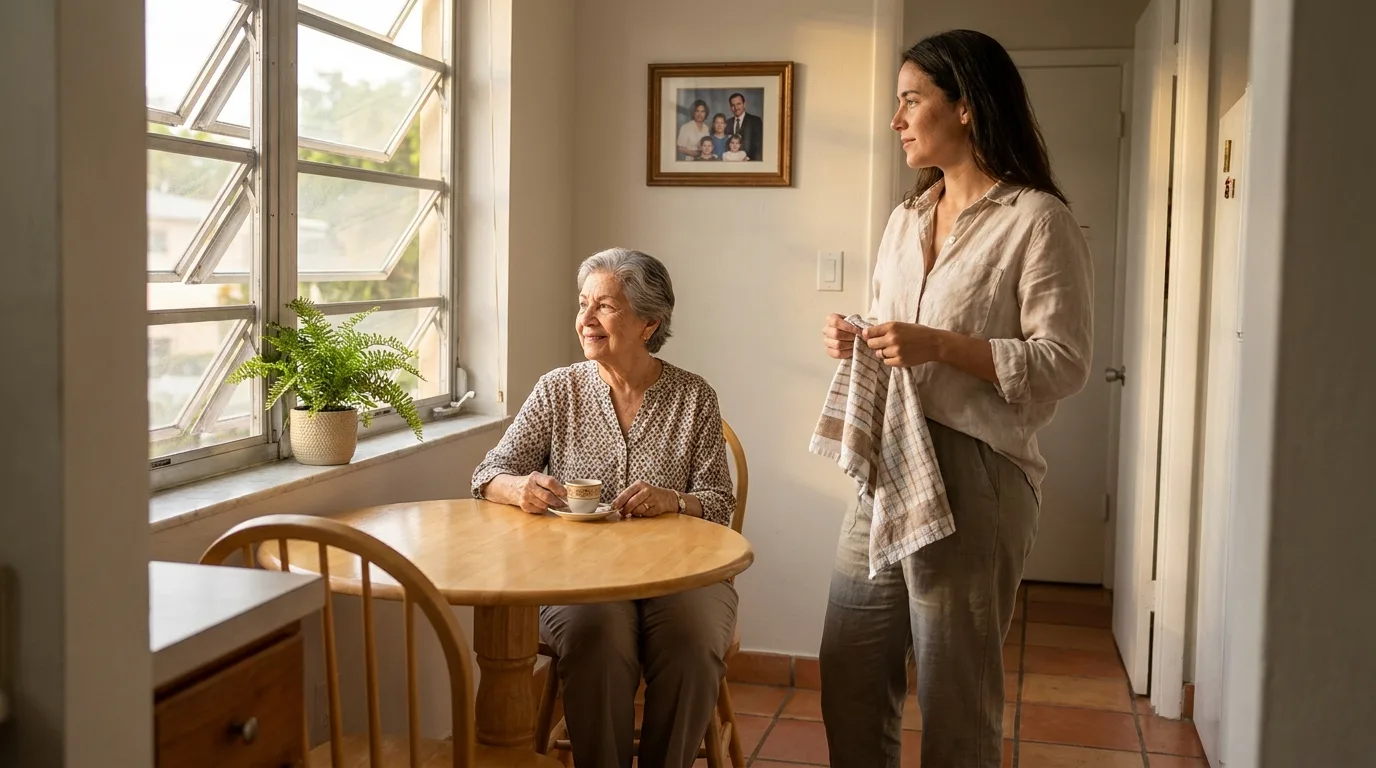
What a caregiver actually does in the house
A non-medical caregiver spends the day helping your parent do the ordinary things that have gotten hard. Bathing, dressing, breakfast, the walk from the bed to the bathroom, the pills that sit on the counter waiting for a reminder, the laundry, the ride to the cardiologist, the quiet company in the afternoon. It is hands-on help with daily life, in your parent's own home, for as many hours as the plan calls for.
What a caregiver does not do is anything a doctor has to order. If your parent needs that kind of care, a home health nurse comes in for that piece, and the caregiver keeps handling the rest of the day around it. Many families run both at once.
The daily tasks, in plain English
This is the working list a caregiver moves through on a normal day. Not every item every day. Whatever your parent needs, in the order the day calls for it.
- Help with a shower or bed bath
- Dressing and grooming
- Brushing teeth and denture care
- Toileting and incontinence help
- Transfers from bed to chair
- Walking beside your parent for balance
- Reminders to take medication on time
- Cooking breakfast, lunch, and a light dinner
- Cutting food and helping with eating
- Making sure water is within reach
- Changing the bed and doing laundry
- Light tidying of the kitchen and bathroom
- Grocery runs and pharmacy pickups
- Driving to appointments and waiting through them
- Reading aloud, cards, TV, conversation in English or Spanish
- Watching for changes and calling the nurse
Not in the job
- Wound care or dressing changes
- Injections or IV care
- Catheter or ostomy changes
- Physical or occupational therapy
- Deciding when to adjust a medication
- Diagnosing anything new
Where the RN comes in
A registered nurse visits the home first, usually within 24 hours of your call, and writes the care plan the caregiver follows. That visit is free and you are not signing anything to have it.
After care starts, a live nurse is reachable at any hour. If the caregiver sees a bruise, a new cough, confusion that was not there yesterday, or your parent refuses a shower three days running, the nurse hears about it and calls you.
What you can do tonight
You do not have to solve this before morning. You do have to write a few things down while they are fresh.
Write down what changed
Not a diagnosis, just what you noticed. A fall. Weight loss. The stove left on. A missed dose. Dates if you have them, guesses if you do not.
List the hours that hurt most
Mornings for the shower and breakfast. Evenings when confusion is worse. Weekdays when you are at work. Circle the hours where help would matter first.
Gather the medication bottles
Put every bottle, inhaler, and eye drop on the kitchen counter, prescription and over the counter both. The nurse will want to see the labels at the assessment.
Start smaller than you think
You can start with a few mornings a week and add hours later. Families almost always overestimate what they need in the first phone call, and a smaller schedule your parent will actually accept beats a bigger one they push back on.
Ask for the free home visit
Call in the morning and a nurse comes out, usually within 24 hours. You get a written care plan you can keep, whether or not you book care with us.
Non-medical home care next to home health
People use the same word for two different things. Here is the split.
| What it is | Non-medical home care(what we do) | Home health |
|---|---|---|
| Who pays | The family, privately | Often covered by Medicare when a doctor orders it |
| Who orders it | The family decides | A doctor writes the order |
| What happens in the home | Bathing, meals, mobility, rides, company | Nursing procedures, therapy visits |
| How often | Hours a day, up to around the clock | Short visits, a few times a week |
| Written plan | RN care plan, yours to keep | Clinical plan tied to the doctor's order |
Many families run both. The home health nurse handles the medical piece. The caregiver handles the rest of the day.
One thing not to skip
If your parent is showing sudden confusion, chest pain, a bad fall, a fever, or trouble speaking, that is not a home care question tonight. Call the doctor or 911. Home care fits around medical care, it does not replace it.
Common questions
How many hours a day do I actually need?
It depends on where the day breaks down. Some families start with mornings only, for the shower, breakfast, and medication reminders. Others need evenings, overnights, or around the clock. The nurse who comes out for the assessment will walk through the day with you and suggest a schedule you can adjust.
Who will be caring for my parent?
One primary caregiver, matched to your parent, covers most shifts, because a familiar face makes the days easier. A backup caregiver is already confirmed for days off and sickness. Both are W-2 employees of the agency, not contractors, so someone is always accountable if a shift needs to be filled.
My mother only speaks Spanish. Does that work?
Yes. Many caregivers are bilingual in English and Spanish, and the nurse will match your mother with someone she can talk to in her own language. That is not a nice extra. It is the difference between her feeling at home and feeling managed.
Can a caregiver give my father his pills?
A caregiver can remind him it is time, hand him the bottle, bring water, and watch that he takes it. They do not decide the dose or change the schedule. If something looks off, the caregiver tells the nurse and the nurse calls you or the doctor.
What if my father refuses the shower?
He is an adult and he can refuse. A good caregiver does not argue or force it. They wait, offer again later, try a sponge bath, or bring it up the next day. If refusal becomes a pattern, the nurse steps in and helps the family figure out what is really going on.
How does the money work if I do not know how many hours yet?
You do not need to know yet. Cost depends on how many hours and what level of help your parent needs, and the RN assessment is free with no obligation. At the visit the nurse gives you written hourly rates along with the care plan, so you know what you are walking into before you decide anything.