
The first thing to know
Medication mix-ups between the hospital list and what was already in the house are the most common reason people end up back in the ER. Before you do anything else tonight, put every pill bottle in the house on the kitchen table, old and new, and compare them to the discharge sheet line by line. If two bottles look like they do the same thing, or a familiar pill is missing from the new list, call the discharge number on the paperwork before the next dose.
Before you go to sleep tonight
Ten minutes of walking through the house saves a fall at 3 a.m.
- Clear a straight path from bed to bathroom
- Move the phone, its charger, and a lamp within arm's reach of the bed, on the side your parent gets up on
- Put water and any nighttime pills on the nightstand
- Take up loose rugs in the hallway and bathroom
- Turn on a night light in the bathroom and hall
- Set shoes with grip, not socks, by the bed
- Write the discharge nurse's number on the fridge
- Put the walker or cane on the same side as the phone
- Note the next dose time and the next appointment on paper
- Watch overnight for new confusion, shortness of breath, or a wound that looks worse than it did at discharge
What to do in the first 48 hours
Work through these in order. You do not have to do them all yourself.
Read the discharge paperwork out loud together
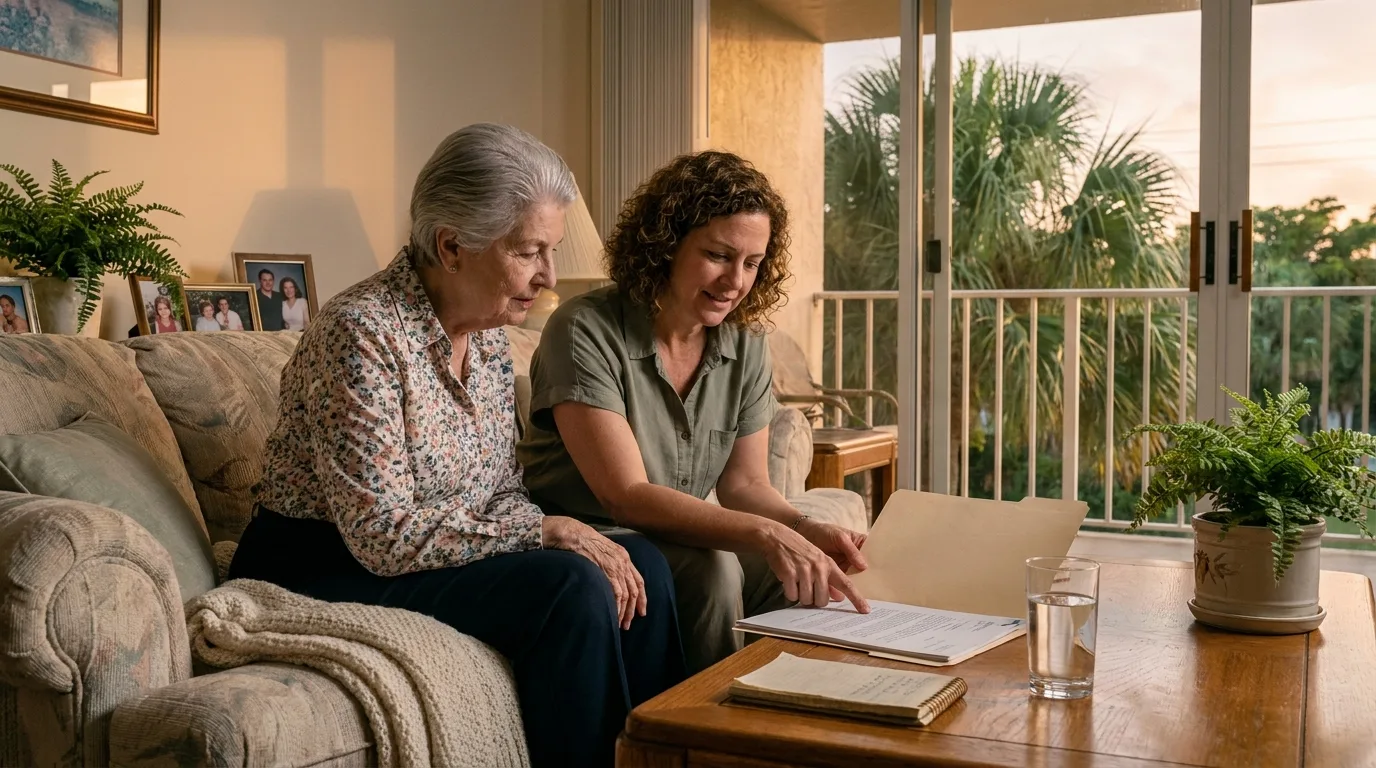
Sit next to your parent and read each instruction out loud. Circle anything either of you does not understand. Hospitals discharge fast, and the paperwork is written for the next clinician, not for the person going home.
Reconcile every medication before the next dose
Line up old bottles and new bottles. If the hospital stopped a drug, put that bottle in a bag and out of reach so it does not get taken by habit. If anything is unclear, call the number on the discharge sheet, not the primary doctor's office, which may not have the hospital record yet.
Book the follow-up appointment now, not next week
Most discharge plans require a follow-up within 7 to 14 days. Call in the morning and put it on the calendar before the office fills up. Ask whether it can be a video visit if getting out of the house is hard.
Decide who is in the house for the next three days
Meals, bathroom trips, and getting in and out of bed all need a person nearby, not on call from another zip code. Map out who covers which hours on paper. Gaps you can see are gaps you can fill.
Call for help before you are exhausted
If the map has holes, or you are the only name on it, call before you burn out on night three.
Home health and home care are not the same thing
Most families discharged from a Miami hospital end up needing both. Knowing which is which saves days of phone calls.
| What you need | Home health (medical) | allaround (non-medical)(what we do) |
|---|---|---|
| Wound care, injections, physical therapy | Yes, ordered by the doctor | No |
| Bathing, dressing, meals | No | Yes |
| Medication reminders | No | Yes |
| Someone in the house overnight | No | Yes |
| Rides to the follow-up appointment | No | Yes |
| Fall-risk help walking to the bathroom | No | Yes |
Many families use both at the same time. The home health nurse comes for the medical visit; a caregiver is in the house the rest of the day.
When to stop reading and call 911
New chest pain, trouble breathing, sudden weakness on one side, a fall with a hit to the head, confusion that was not there this morning, or a fever climbing past what the discharge sheet said to expect. Do not wait for the follow-up appointment. Call 911 or the discharge number on the paperwork.
What is different at home
- No call button by the bed
- No nurse walking by every hour
- Stairs, rugs, and a bathroom that was fine last month
- Food that has to be shopped for and cooked
- Pills that were handed over in a cup, now in bottles
- Nights when everyone else in the house is asleep
What a caregiver in the home actually does
A caregiver from allaround is in the house to do the parts of the day your parent used to do alone: getting out of bed safely, a shower without a slip, breakfast, the pill reminder, the ride to the follow-up, a walk to the mailbox that used to be nothing.
Caregivers are W-2 employees, not contractors sent from an app. Many are bilingual in English and Spanish, so a parent who is more comfortable in Spanish gets a caregiver who speaks it. A registered nurse writes the plan and is reachable 24/7 if something at home shifts.
Common questions
Mom was just discharged tonight. Can someone come tomorrow?
Yes. A registered nurse can come to the home for a free assessment, generally within 24 hours of your call, across Miami-Dade and Monroe counties. The nurse writes a care plan on the spot and you decide from there. There is no obligation to book care after the visit.
How do I know if she needs home health, a caregiver, or both?
If the hospital ordered wound care, physical therapy, or injections, that is home health, and it is ordered by the doctor. If she needs help bathing, eating, moving safely, or getting to the follow-up, that is non-medical home care. Many families need both in the first weeks, and the two teams can work in the same house on the same day.
What does the RN home visit actually cover?
The nurse walks through the house, looks at fall risks, reviews the discharge paperwork and medication list, and talks with your parent about what the day looks like. You leave the visit with a written care plan you can use with allaround or take to another agency. The visit is free.
My father only speaks Spanish. Will the caregiver?
Many caregivers on the team are bilingual in English and Spanish, so a Spanish-speaking parent gets a caregiver who speaks Spanish. That is about your father being comfortable in his own home, in his own language.
The hospital already set up home health. Do I still need home care?
Home health is a nurse or therapist coming in for a specific medical task the doctor ordered, usually a few visits a week for a short stretch. It does not cover the hours in between: the shower, the meals, the ride to the follow-up, someone in the house at night. Most families who use both find the home health nurse comes for the visit and a caregiver is there the rest of the day.
What if she refuses help once the caregiver is here?
That happens, and it is her right. The caregiver does not argue or push. She listens, gives your parent space, and comes back to it later, and the nurse adjusts the plan if the refusal keeps happening. You will hear about it the same day, not a week later.